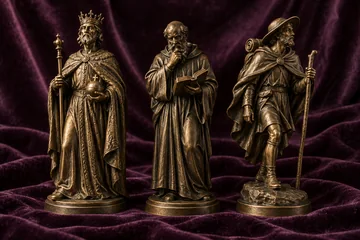
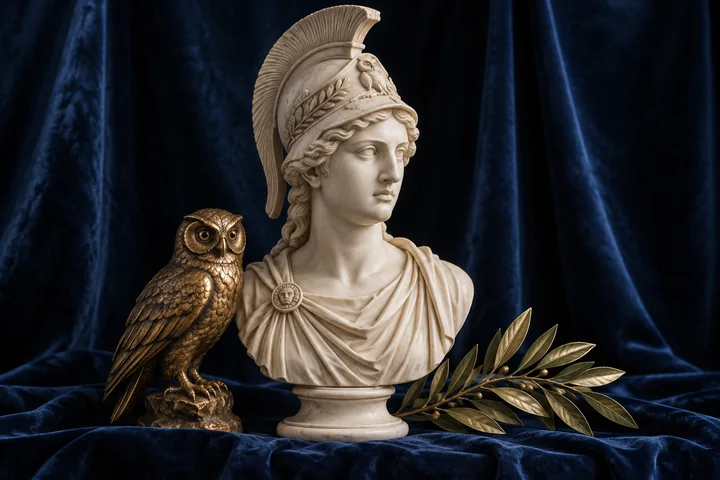
Approach these figures with curiosity.
The images in this test
The test presents twelve figures as ways of looking at motivations and actions. A similar gesture might seek care, belonging, creation or change; the reading explores those differences. Answer the 12 questions by choosing one option on each screen, according to what fits you now. At the end you can read the result or start again. Profiles in the catalogue: Hero, Caregiver, Explorer, Sage, Creator, Ruler, Lover, Jester, Innocent, Everyperson, Magician, Rebel.
How your reading is built
Each option adds points to related profiles. The score is compared with the maximum possible for each profile. Affinities with the same proportional score appear together; none is selected at random. Keeping the same choices preserves the affinities across languages. The reading introduces the profile through an image. With one or two main affinities it adds strengths, a challenge, a practical scene and a question. With three or more it offers the profile images and a shorter shared prompt. A single main affinity may be accompanied by other nearby ones. Up to three supporting answers are also shown.
A way to explore the result
Choose an example from the profile and recall one situation where you acted similarly and another where you did not. The comparison helps you explore the figure without turning it into a role you must always perform. Use what helps you consider a particular experience and allow other parts not to fit. The affinity is a symbolic reading of these answers, not a fixed identity.
FAQ
What does archetype mean here?
It is a symbolic figure in this application's catalogue. The questionnaire connects answers with twelve profiles using its own rules. The Jungian name used on some pages does not make this game a clinical assessment or an original test by Jung.
Can I recognise more than one figure?
Yes. The result may show shared affinities and, when there is one main affinity, other nearby ones. You may also recognise different figures in different situations; the test does not establish a permanent identity.
Why does my affinity repeat?
The rules are stable: the same options produce the same affinities and scores. An editorial revision may expand the wording without changing the calculation. If your preferences change, you can take the test again with different choices.
What does a tie mean?
Several affinities reach the same proportion of their maximum possible points. All those sharing first place are displayed. With three or more, the reading combines their images with one shared prompt to keep it manageable.
Why does the explanation show only some answers?
The result includes up to three choices that supported the main affinities. These are selected examples, not the complete questionnaire. The calculation does use all valid answers.
Does this result use artificial intelligence?
In this test, affinities and wording come from rules and previously written profiles. AI does not choose the result or invent a profile during the consultation. Past lives is a different tool and does generate a story with AI.
Is this a personality assessment?
It is an activity for entertainment and symbolic reflection, not a validated psychological test. A result may help you formulate questions, but it does not establish who you are or decide what you should do.
How do I save the reading and my notes?
When the result appears, press its save button. Open My readings through the magnifying glass or star to recover the full text, add and save notes, and download a TXT file. Data stays in this browser and does not automatically appear on another device.