The reading and its nuances
Coins, cups, swords and clubs offer four ways to connect resources, relationships, discernment and action. Numbers and court cards add nuance. Notice which suit leads and what perspective another suit introduces.
Explore the spread step by step, from selection to a reading that brings its symbols together.
Coins, cups, swords and clubs offer four ways to connect resources, relationships, discernment and action. Numbers and court cards add nuance. Notice which suit leads and what perspective another suit introduces.
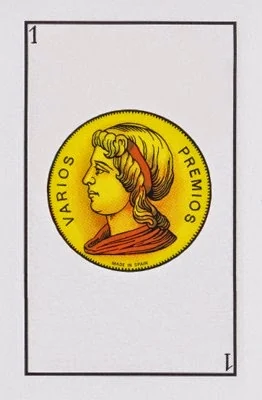
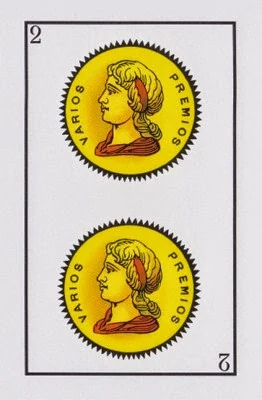
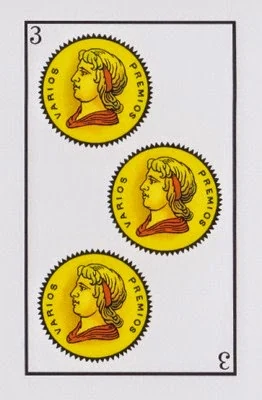
This application uses a 48-card Spanish deck with coins, cups, swords and clubs. Each suit contains ace, two through nine, jack, knight and king. Enter a clear question and choose three of the facedown cards. Wait for the animation to finish and the reading to appear. Positions follow the order in which you choose the cards; they are not assigned past, present and future. The reading offers a symbolic interpretation to reflect on your question.
With Ace of Coins, Knight of Clubs and 2 of Cups, you might read emerging support, an impulse gathering movement and an agreement needing form. In a shared project, the combination connects available means with action and understanding between the people taking part.
This variant uses 48 cards, including eights and nines. Each suit contains ace, two through nine, jack, knight and king. The three selected cards appear upright.
Choose one subject and a clear question. If the tool has no question field, keep it as a personal reference. Connect the symbol with a specific situation and note both what fits and what remains open.
When Retry this reading appears, you can continue with the same question and selection. A new consultation allows another draw, and AI may write a different interpretation. The pauses and usage limits remain in place.
Separate the symbol from what you know through experience. Use its contrast to ask a question or explore a possibility; examples illustrate a reading without certifying facts or fixing the future.
Use Save reading once the result is complete. In My readings you can reopen it, add notes and download it as text. Data stays in this browser; use the library backup if you want to keep it when changing devices.