Explore Gypsy Tarot with 36 original illustrated cards. Enter your question, choose three cards and receive a combined AI reading.
The reading and its nuances
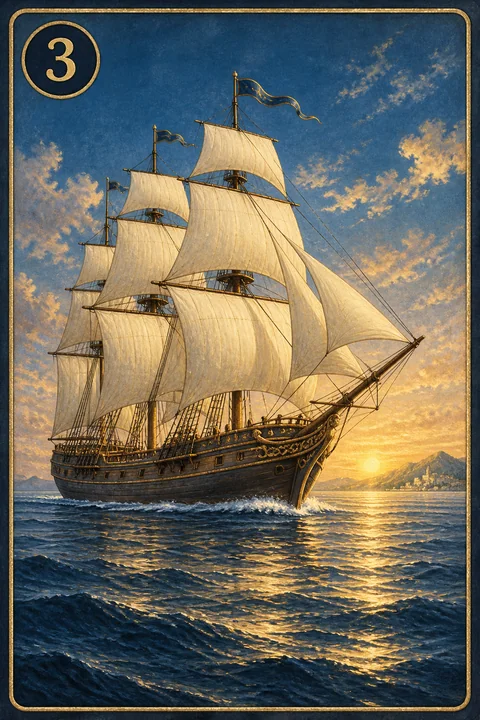
Gypsy Tarot brings together 36 original cards depicting people and everyday scenes. The images represent encounters, relationships, changes and opportunities. The reading connects your three chosen cards with your question.
How this consultation works
Enter a question about the matter on your mind and choose three facedown cards. When the animation finishes, their images and names appear alongside one combined answer. Cards are read in your selection order; the positions do not stand for past, present and future.
An example reading
Imagine Pleasant letter, Meeting and Work and occupation. News, a meeting and an occupation create a thread about exchange and activity. For a project question, explore which communication opens collaboration and which task sustains it. The example links scenes without announcing actual news.
FAQ
Which deck does this reading use?
Our own deck of 36 illustrated cards, numbered from 1 to 36. Each card depicts a scene, with its name shown below in the language of the page.
How can I focus the consultation?
Write a specific question about one subject: a relationship, a change or a project. A little context helps the answer focus on what you want to ask.
Is retrying the same as starting a new consultation?
When Retry this reading appears, you can continue with the same question and selection. A new consultation allows another draw, and AI may write a different interpretation. The pauses and usage limits remain in place.
How can I connect the reading with real life?
Separate the symbol from what you know through experience. Use its contrast to ask a question or explore a possibility; examples illustrate a reading without certifying facts or fixing the future.
Can I keep the result and add notes?
Use Save reading once the result is complete. In My readings you can reopen it, add notes and download it as text. Data stays in this browser; use the library backup if you want to keep it when changing devices.