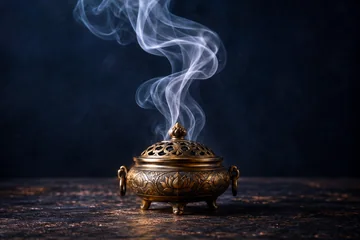
One of humanity's most ancient divination arts. The priests and shamans of antiquity interpreted the behavior of sacred smoke to decipher messages from the gods. Focus on your question or what occupies your mind, and let the smoke speak.
The spirits observe the smoke…
✦
✦
✦
✦
🌫️
The spirits could not respond. Please try again.
Explore this tradition with a welcoming guide, an example and the keys to your consultation.
The reading and its nuances
Smoke offers images of direction, persistence and transformation. Follow the movement before reading it: rising, splitting and turning suggest different questions. The text develops the selected catalogue phenomenon as a metaphor.
How this consultation works
Watch an animation of one of the catalogue's 17 smoke phenomena. The application randomly selects a phenomenon and displays its stored interpretation; it is a visual recreation and does not analyse real smoke.
An example reading
Straight rising smoke can evoke a clear intention; a spiral can suggest a recurring question viewed differently. Ask which detail supports that reading and which part you bring from your experience.
FAQ
Does it read incense smoke or a photograph?
This tool recreates one of 17 animated phenomena. It receives no image and observes no physical smoke. Names concerning colour, scent or density belong to the catalogue's recreation.
How can I focus the consultation?
Choose one subject and a clear question. If the tool has no question field, keep it as a personal reference. Connect the symbol with a specific situation and note both what fits and what remains open.
Can a new consultation give a different result?
Yes. A new draw may select different symbols. The same symbol, language and position keep their catalogue text; combinations also depend on the other pieces. The pauses accompany the experience without changing the meaning.
How can I connect the reading with real life?
Separate the symbol from what you know through experience. Use its contrast to ask a question or explore a possibility; examples illustrate a reading without certifying facts or fixing the future.
Can I keep the result and add notes?
Use Save reading once the result is complete. In My readings you can reopen it, add notes and download it as text. Data stays in this browser; use the library backup if you want to keep it when changing devices.